

3 12, 2025

BUD 600 Analytical Meditation II 分析式禪修II

2025-12-03T14:01:50-08:00Categories: Blog, Intermediate Curriculum, Jirka Hladis, reg-EN, reg-semester, registration|

BUD 600 Analytical Meditation II Faculty: {!{types field='faculty' style='text'}!}{!{/types}!} BUD 600 課程描述: 本學期的課程將以“四重次第的空性禪修”為主題。課程內容取材自了義學院基礎和中級課程,我們將依次研習聲聞乘、唯識、中觀與佛性如來藏階段,借由各宗義體系所蘊含的核心洞見,逐步建立對無我、空性和佛性的堅固定解。 課程補充說明: 本學期的課程將以“四重次第的空性禪修”為主題。課程內容取材自了義學院基礎和中級課程,我們將依次研習聲聞乘、唯識、中觀與佛性如來藏階段,借由各宗義體系所蘊含的核心洞見,逐步建立對無我、空性和佛性的堅固定解。 本課程將提供針對各空性次第的禪修引導,引導錄音供學生日修使用。 Drawing on teaching materials from Nitartha’s foundational and intermediate curricula, this course guides students through the stages of Śrāvakayāna, Cittamātra, Madhyamaka, and Buddha Nature. We explore the essential insights preserved within each of these philosophical systems as a pathway to gaining unshakable certainty in the view of selflessness, emptiness, and Buddha Nature. You can think of this class as an applied preparatory course for the full range of Nitartha offerings. Traditionally, in India and early Tibet, the progressive stages of meditation on emptiness served as a preliminary training

3 12, 2025

SCA 510 Buddhist Visual Literacy

2025-12-03T13:47:13-08:00Categories: reg-EN, reg-semester, registration|

SCA 510 Symbolizing the Awakened Heart: Introduction to Buddhist Visual Literacy Faculty: {!{types field='faculty' style='text'}!}{!{/types}!} This course introduces Buddhist visual literacy, meaning it develops a basis for exploring and understanding Buddhist symbolism and iconography through the use of classic Buddhist teachings on seeming and ultimate realities, while considering the roles of conception and perception. We’ll learn through illustrated presentations and contemplative experiments to explore how meaning is made and communicated when producing and viewing imagery, and especially Buddhist imagery. Part of the course delves into the roots of Buddhist symbolism and iconography, and applies visual literacy skills in reading specific works of Buddhist art. Mode

3 12, 2025

BUD 630 Buddha Nature

2025-12-03T09:00:45-08:00Categories: reg-EN, reg-semester, registration|

BUD 630 Buddha Nature: Luminous Heart of the Tathagata Faculty: {!{types field='faculty' style='text'}!}{!{/types}!} This course is an exposition of the Tathāgatagarbha philosophical tradition, based on the The Mahayana Uttaratantra Shastra: Fourth Vajra Point root text. Students cultivate certainty in the view of Buddha nature—the essence of awakening present in all beings. The Fourth Vajra Point of the Uttaratantra establishes Buddha nature through three reasonings, its ten aspects, nine analogies and five reasons why it is necessary to teach it. PREREQUISITE: BUD 501, BUD 510, BUD 520, BUD 530 REQUIRED TEXTS: Buddha Nature: The Mahayana Uttaratantra Shastra by Arya Maitreya, Translated by

2 12, 2025

BUD 530 《心與心的世界 Ⅳ:毘婆沙與經量部之道》

2025-12-02T11:19:17-08:00Categories: reg-EN, reg-semester, reg-ZH, registration|

BUD 530 《心與心的世界 Ⅳ:毘婆沙與經量部之道》 教師: {!{types field='faculty'}!}{!{/types}!} 課程簡介:依據《為新心開啟宗義門》原典,系統講解基礎乘佛教中毘婆沙宗與經部宗所呈現的道與果。道由止與觀(奢摩他與毘缽舍那)構成。將展開討論以下關鍵主題:四聖諦、四念處、十二緣起支、三十七菩提分。每一個主題都配有分析式禪修的體驗部分。 先修課程: BUD 501(必要);BUD 510与BUD 520 (强推荐) 所需教材: 《心與心的世界4》中文資料手冊,了義學院出版 《為新心開啟宗義門》原典:竹慶本樂仁波切、阿闍黎喇嘛滇巴嘉誠、阿闍黎凱桑汪迪著,了義學院出版 上課時間: 京港臺 本地時間 每週二晚上 20:00–21:30 (太平洋時間 4:00–5:30 a.m.) 課程日期: 2026年1月20日 – 5月5日 (2月17日春節 休息) 費用: ${!{types field='course-cost' style='text'}!}{!{/types}!} 了義學院的付款計畫和財務資助(PPFA)項目由同學資助,以支持那些沒有此項資助就無法參加學院課程的人。如需申請,請在註冊課程前填寫 PPFA 申請表。 現在注册報名 WHAT YOU WILL LEARN: The view of the Sautrantika Philosophical System How this system classifies objects and its view of the two realities What are specifically and generally characterized phenomena and why that matters Their unique presentation of hidden phenomena and the aggregates Their perspective about three times The Path: Its Meaning The Path:

2 12, 2025

BUD 510 Mind and Its World II

2025-12-02T10:44:15-08:00Categories: reg-semester, registration|

BUD 510 Mind and Its World II: Modes of Engagement Faculty: {!{types field='faculty' style='text'}!}{!{/types}!} This course completes the introductory exposition of topics drawn from the Pramāna and Abhidhama traditions, based on the Classifications of Mind and Collected Topics root texts. It provides students with the tools for delineating conceptual and non-conceptual mind in meditation, known as the essential modes of engagement of mind. PREREQUISITE: BUD 501 REQUIRED TEXTS: Root text: Classifications of Mind (Lorik), by Khenpo Tsultrim Gyamtso Rinpoche, Nitartha Institute Publications Root text: Collected Topics (Düdra), by Acharya Lama Tenpa Gyaltsen, Nitartha Institute Publications Mind & Its World 2

30 07, 2025

BUD 501 Mind and Its World I 了義學院課程大綱

2025-12-02T10:40:16-08:00Categories: reg-EN, reg-semester, reg-ZH, registration|

BUD 501 Mind and Its World I: Valid Cognition with consecutive Chinese translation  Faculty: {!{types field='faculty' style='text'}!}{!{/types}!} This course explores the question: How do you obtain accurate and valid knowledge about the world? That's the subject of pramana, or Buddhist epistemology. We typically assume that what we know about the world is valid. But is it? Our mind processes information so quickly, it responds so fast to what's happening around us that we usually don't realize when we are having a conceptual experience that is not actually in agreement with the object that we are experiencing. Course Description: This course is an introductory exposition

30 05, 2024

Buddha Nature: The Most Powerful Antidote

2024-05-31T14:40:03-07:00Categories: Blog, Mahamudra, Meditation|

Buddha Nature: The Most Powerful Antidote Written by Israel Lifshitz We, as 21st century Westerners, have a strong historical, religious and cultural background of low self-esteem and self-deprecation. Our ideas about sin and guilt are so deeply ingrained that even the non-religious, free thinking scientist Sigmund Freud said in Civilization and Its Discontents: "Due to our own psychic constitution we have a limited capacity for virtue and happiness, and therefore, we must feel satisfied with a moderate level of mental balance and wellbeing."* This is not a minor issue. It can even work as our biggest obstacle to progressing along the Buddhist path. If deep down in our

12 05, 2024

Key Qualities of Mahamudra Meditation

2024-05-12T14:21:54-07:00Categories: Blog, Mahamudra, Meditation|

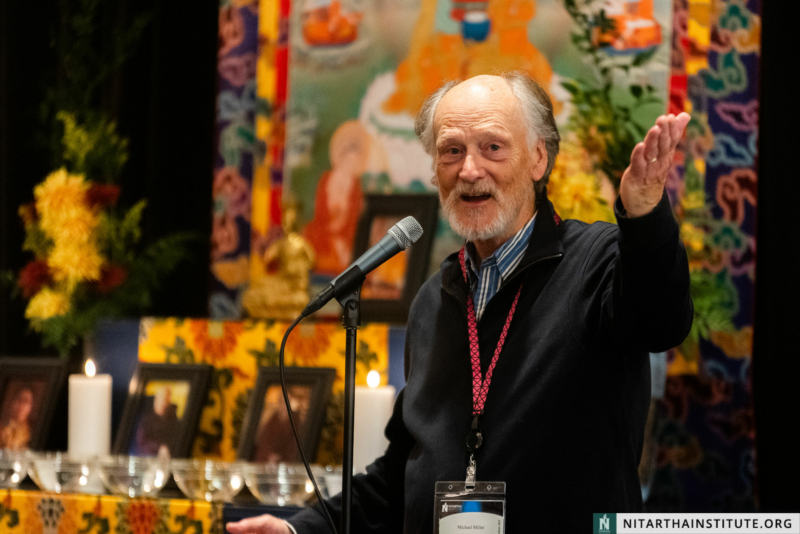
Key Qualities of Mahamudra Meditation Written by Michael Miller Nitartha CFO Nalandabodhi Karunika and Practice Instructor As we embark on our journey through the Mahamudra practices, it is important to note the differences between Mahamudra meditation and simple shamatha. The differences are subtle but profound, and we can miss the point entirely if we do not know them. First, renunciation or revulsion is important. We need to develop some sense of giving in, some sense of renunciation. This does not mean going off to a cave and giving up all our worldly possessions. But it does mean that we must be willing to give up our fixed

30 04, 2024

Improve your meditation with thangka drawing

2024-05-03T11:03:08-07:00Categories: Blog, Meditation, Science of Creative Arts, Shamatha|

Drawing the Awakened Heart Improve your meditation with thangka drawing, one of the courses offered by Nitartha’s Department of Science of Creativity and the Arts. This is a powerful tool for developing our visualization and creation stage practices. After taking this course, many students have found it easier to generate their visualizations and with greater clarity. Studio classes are also a natural environment for practicing shamatha meditation. One's mind relaxes and simply focuses on drawing, which can be a very calming experience. Nitartha teaches thangka drawing based on the Karma Gadri Lineage. One of the four major schools of Tibetan thangka painting, we begin by learning the

30 04, 2024

Mind and Its World II: How Mind Engages with its World

2024-04-30T10:13:08-07:00Categories: Blog, Foundation Curriculum, Mind & Its World, Shedra|

Mind and Its World II: How Mind Engages with its World After exploring how mind cognizes in a valid or non-valid way in the first course in the Mind and Its World series, we are ready to look at how the mind works from the perspective of the way in which it engages with its objects, also known as “modes of engagement.” We spend a lot of our time engaged with our concepts, though we are rarely aware of this. Of course the conceptual mind is very useful, we need it to navigate our experiences of the world. But it is not a direct perception, it does not

Go to Top