
3 12, 2025

BUD 630 Buddha Nature

2026-07-25T11:00:50-07:00Categories: reg-EN, reg-semester, reg-ZH, registration|

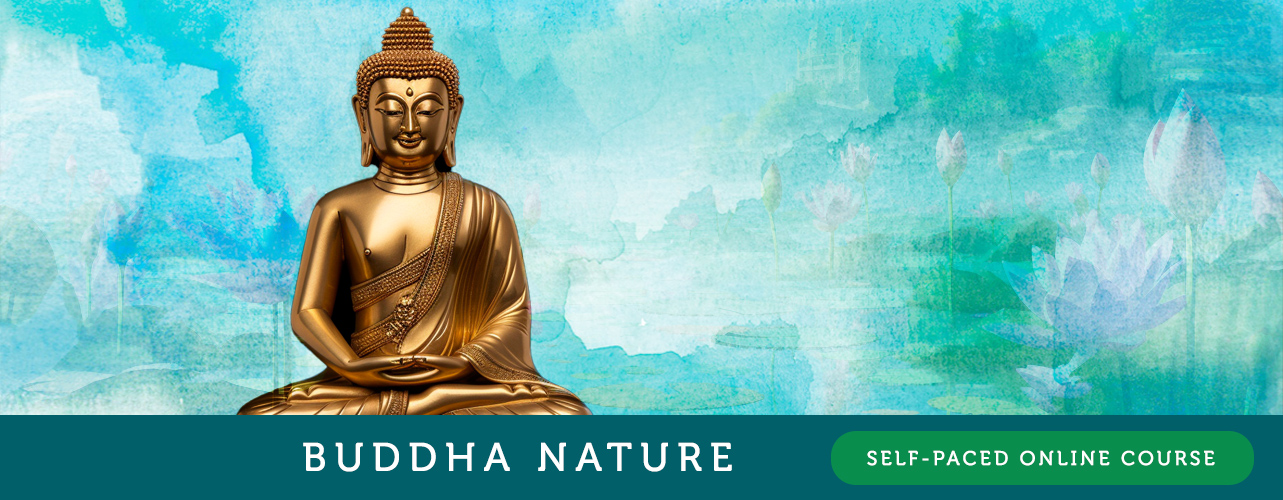
BUD 630 Buddha Nature: Luminous Heart of the Tathagata Faculty: {!{types field='faculty' style='text'}!}{!{/types}!} This course is an exposition of the Tathāgatagarbha philosophical tradition, based on the The Mahayana Uttaratantra Shastra: Fourth Vajra Point root text. Students cultivate certainty in the view of Buddha nature—the essence of awakening present in all beings. The Fourth Vajra Point of the Uttaratantra establishes Buddha nature through three reasonings, its ten aspects, nine analogies and five reasons why it is necessary to teach it. PREREQUISITE: BUD 501, BUD 510, BUD 520, BUD 530 REQUIRED TEXTS: Buddha Nature: The Mahayana Uttaratantra Shastra by Arya Maitreya, Translated by

2 12, 2025

BUD 510 Mind and Its World II

2026-07-25T11:00:09-07:00Categories: reg-EN, reg-semester, reg-ZH, registration|

BUD 510 Mind and Its World II: Modes of Engagement Faculty: {!{types field='faculty' style='text'}!}{!{/types}!} This course completes the introductory exposition of topics drawn from the Pramāna and Abhidhama traditions, based on the Classifications of Mind and Collected Topics root texts. It provides students with the tools for delineating conceptual and non-conceptual mind in meditation, known as the essential modes of engagement of mind. PREREQUISITE: BUD 501 REQUIRED TEXTS: Root text: Classifications of Mind (Lorik), by Khenpo Tsultrim Gyamtso Rinpoche, Nitartha Institute Publications Root text: Collected Topics (Düdra), by Acharya Lama Tenpa Gyaltsen, Nitartha Institute Publications Mind & Its World 2

30 07, 2025

BUD 501 Mind and Its World I

2026-07-25T12:23:57-07:00Categories: reg-EN, reg-semester, registration|

BUD 501 Mind and Its World I  Faculty: {!{types field='faculty' style='text'}!}{!{/types}!} This course is an introductory exposition of topics drawn from the Pramāna tradition, based on the Classifications of Mind root text. Students explore the criteria for the validity of cognition, the fourfold classification of direct valid cognition, seeming direct cognition and non-valid cognition. PREREQUISITE: None REQUIRED TEXTS: Root text: Classifications of Mind (Lorik), by Khenpo Tsultrim Gyamtso Rinpoche, Nitartha Institute Publications Mind & Its World 1 Sourcebook, Nitartha Institute Publications DATES & TIMES: {!{types field='dow'}!}{!{/types}!} {!{types field='course-dates'}!}{!{/types}!}, {!{types field='meeting-times'}!}{!{/types}!} COST: {!{types field='course-cost' style='text'}!}{!{/types}!} Nitartha’s Payment Plan

7 09, 2023

BUD 692 Treasury of Valid Cognition and Reasoning – Chapter 1 (SPOC)

2026-07-23T08:27:41-07:00Categories: Blog, reg-spoc, registration|

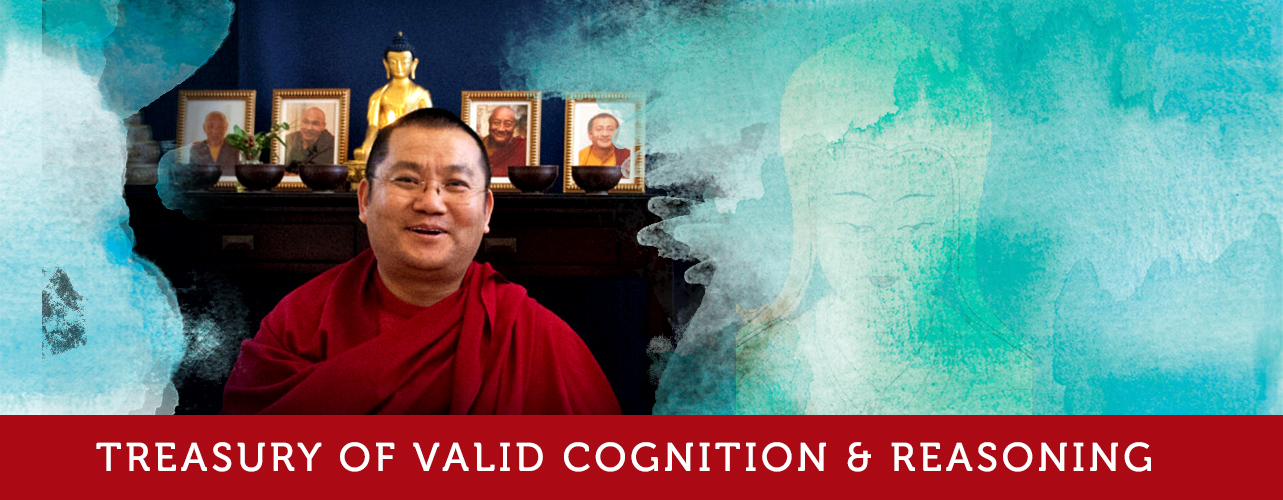
BUD 692 Treasury of Valid Cognition and Reasoning - Chapter 1 (SPOC) Faculty: {!{types field='faculty' style='text'}!}{!{/types}!} This is the first of a series of teachings by Acharya Lama Kelzang Wangdi on Sakya Paṇḍita’s entire Treasury of Valid Cognition and Reasoning. Acharya Lama Kelzang will begin to teach chapter 1, “Investigation of the Object.” This chapter sets forth the major terminology of the tradition of valid cognition: valid cognition and mistaken cognition, their related objects that are things, non-things, and clearly appearing non-existents, and the modes of engagement of objects as appearing objects, referent objects, and objects of engagement. The theories of perception of the Vaibhāṣikas

13 12, 2022

BUD 692 Treasury of Valid Cognition and Reasoning

2026-07-25T11:01:27-07:00Categories: Acharya Kelsang Wangdi, Advanced Curriculum, reg-EN, reg-semester, registration, Valid Cognition|

BUD 692 Treasury of Valid Cognition and Reasoning (Chapters 7 & 9) Faculty: {!{types field='faculty' style='text'}!}{!{/types}!} Course Description: This course is the continuation of an in-depth study of Treasury of Valid Cognition and Reasoning, (tshad ma rigs gter) by renowned scholar Sakya Pandita (1182-1251) – an influential work that inaugurated a new period of pramana studies in Tibet by focusing particularly on Dharmakirti’s Pramanavarttika and identifying the errors of earlier Tibetan scholars, especially Chapa Chökyi Senge. We will study Sakya Pandita’s seminal work on the basis of the commentary by Jamyang Loter Wangpo (1847-1914). This fall 2026, Acharya Kelzang Wangdi will continue teaching chapter 9

9 03, 2022

BUD 500 Analytical Meditation I (SPOC)

2026-07-23T08:25:17-07:00Categories: reg-spoc, registration|

BUD 500 Analytical Meditation I (SPOC) This course is a systematic training in the meditation of special insight in the tradition of Tibetan Buddhism. Having first established a ground of calm abiding, students engage in analytical vipashyana or insight meditation into how our use of conceptuality contributes to the creation of karma and kleśa, and how to reverse that process by contemplating identitylessness, emptiness. The course will cover Part I on the Common Samadhis, from Moonbeams of Mahāmudrā. Faculty: Jirka Hladiš   PREREQUISITES: It is strongly recommended that students have taken some courses in the Foundational Curriculum, particularly BUD 501 as a minimum.

12 12, 2021

BUD 630 Buddha Nature: Luminous Heart of the Tathagata (SPOC)

2026-07-23T08:21:04-07:00Categories: reg-spoc, registration|

BUD 630 Buddha Nature: Luminous Heart of the Tathagata (SPOC) This course is an exposition of the Tathāgatagarbha philosophical tradition, based on The Mahayana Uttaratantra Shastra: Fourth Vajra Point root text. Students cultivate certainty in the view of Buddha nature—the essence of awakening present in all beings. The Fourth Vajra Point of the Uttaratantra establishes Buddha nature through three reasonings, its ten aspects, nine analogies and five reasons why it is necessary to teach it. PREREQUISITES: BUD 501 is required, and it is recommended that all four Mind and Its World courses be taken before taking level 3. REQUIRED TEXTS: Root

12 12, 2021

BUD 620 Paths and Bhumis: The Path to Enlightenment (SPOC)

2026-07-23T08:26:12-07:00Categories: reg-spoc, registration|

BUD 620 Paths and Bhumis: The Path to Enlightenment (SPOC) This course is an exposition of the Buddhist path based on The Presentation of Bhumis, Paths & Results in the Treasury of Knowledge root text. Students learn what is necessary for entering and progressing on the path and what the goal of spiritual journey is, through exploring the five paths, the ten bodhisattva bhumis, as well as the result: nirvana, kayas, wisdoms and enlightened activity. PREREQUISITES: BUD 501, BUD 510, BUD 520, BUD 530, BUD 601, BUD 610, BUD 630 REQUIRED TEXTS: Root Text: The Presentation of Bhumis, Paths & Results

12 12, 2021

BUD 610 Madhyamaka Philosophical Tradition: Not Even a Middle (SPOC)

2026-07-23T08:19:22-07:00Categories: reg-spoc, registration|

BUD 610 Madhyamaka Philosophical Tradition: Not Even a Middle (SPOC) This course is an overview of the Madhyamaka tradition of the Mahayana, which propounds the view of shunyata, the emptiness of all phenomena, which is the transcendence of all views, the ultimate freedom from all reference points and discursiveness. We will study the presentation of the two realities (ultimate and seeming), the differences and commonalities between the subschools of Prasangika and Svatantrika, the rangtong-shentong distinction, the array of reasonings that Madhyamikas use to deconstruct the notions of a personal self and really existing phenomena, the Madhyamaka-style four foundations of mindfulness (based on the ninth chapter

12 12, 2021

BUD 601 Cittamatra Philosophical Tradition: Appearances Are Mere Mind (SPOC)

2026-07-23T08:17:43-07:00Categories: reg-spoc, registration|

BUD 601 Cittamatra Philosophical Traditions: Appearances Are Mere Mind (SPOC) This course is an exposition of the Cittamatra philosophical tradition, based on The Mind Only Tenet System root text. Students engage in the philosophical reformulation of experience arising from meditation practice, declaring reasonings that establish objects as not separate from mind. This is followed by the presentation of the true and false aspectarians and the classification of knowable objects into the three natures, as well as the theory of the eight-fold collection of consciousness. PREREQUISITES: BUD 501, BUD 510, BUD 520, BUD 530 REQUIRED TEXTS: Root text: The Mind Only Tenet

Go to Top